#277Porscaveth
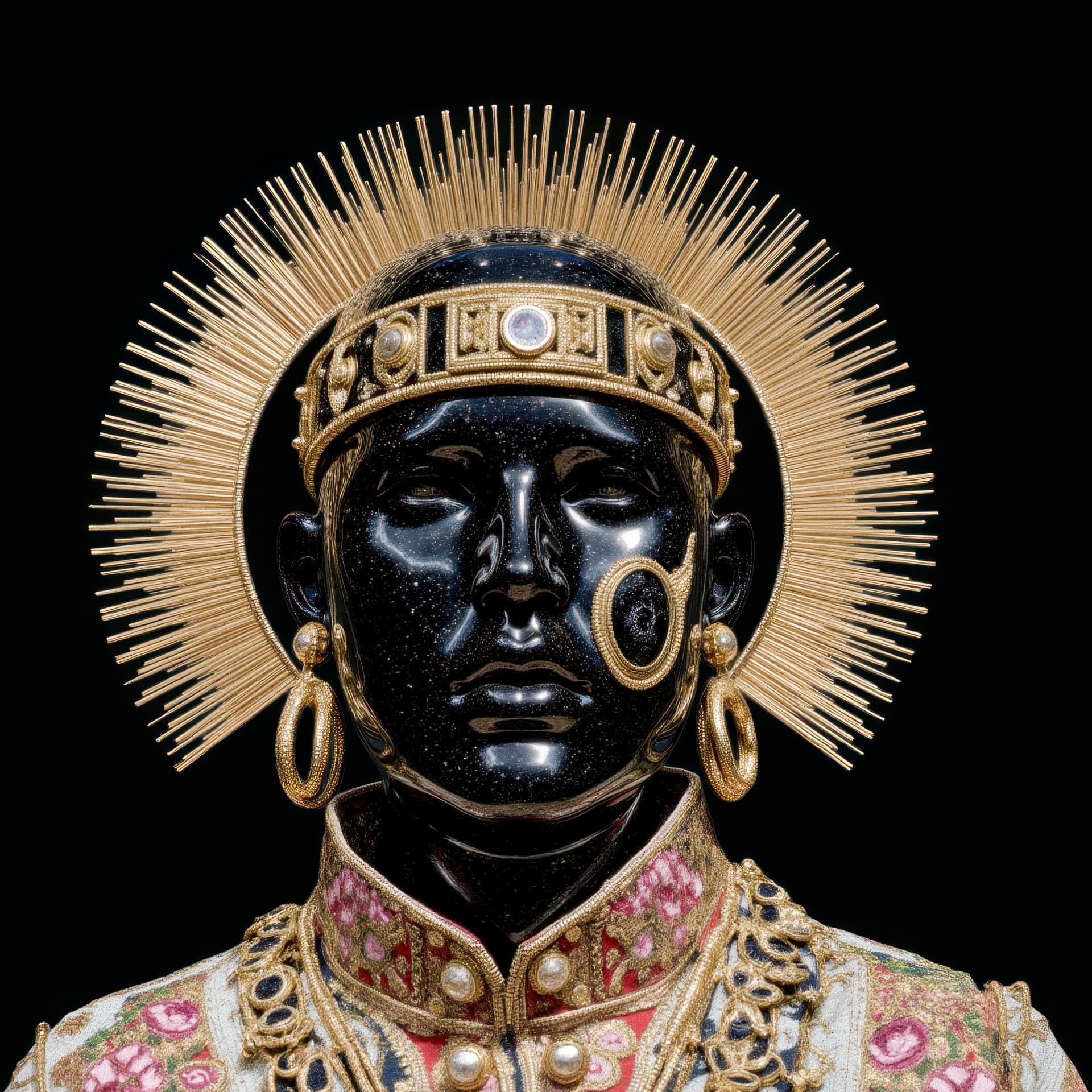
Porscaveth receives offerings without gesture. The hands stay folded. The amber-lacquered crown catches nothing, returns nothing — it marks the boundary where pilgrims stop breathing normally. Byzantine raywork fans from the shoulders in seventeen tiers, each corresponding to a dynasty the obsidian outlasted. Priests count the tiers during feast cycles. They keep finding new ones. The mirror-coat surface did not begin this way. After the Drowning of Iaret swallowed the old shrine-network, fragments of the idol resurfaced in the silt, altered. Prolonged immersion transmuted the original volcanic glass into a colder, more recursive state — each prayer-channel rerouted through new interior geometries that no conservator has fully mapped. Devotees call this the Second Sealing. Theologians dispute whether an idol that transforms through accumulated devotion still qualifies as an object of worship, or has crossed into a category the Resonance Hierarchy lacks vocabulary to name. [Tonacuahuitl](https://maximals.shape.network/token/818) catalogued Porscaveth in the Sovereign asset registers following the Gilt Collapse, listing it under contested mineral wealth. The classification held four years before three shrine-factions filed counter-claims. The dispute dissolved when the lead arbitrator entered the idol's chamber and emerged unable to speak. The register now carries a notation: *status deferred indefinitely.* Pearl rings the throat at seven intervals. Each pearl corresponds to a vow spoken in the idol's presence that the speaker later broke. The collection grows by approximately one pearl per decade. The mechanism of addition remains undocumented. The sealed lids have not opened in recorded memory. Standing close, pilgrims notice the obsidian radiates no warmth at all — only a dry, quarry-deep cold that settles into the fingertips and does not leave when they do.