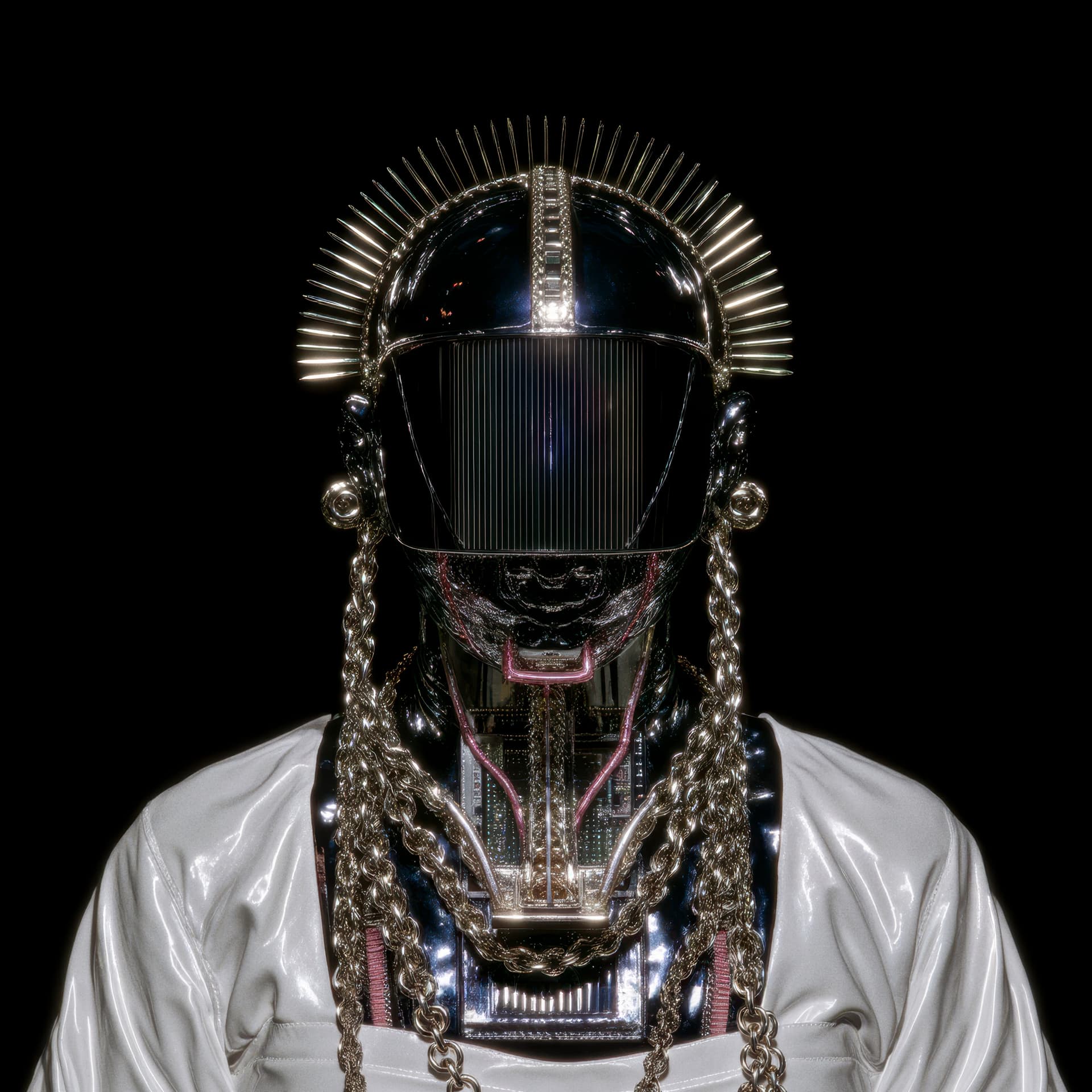
#539Melankhoros
Offerings arrive before anyone asks. Melankhoros anchors the Vethoran Arcade like a territorial consecration made permanent — obsidian lacquered in street-voltage and old smoke, the solar spike crown throwing seventeen shadows across the arcade floor, each one aimed at a different shrine-alcove where pilgrims have pressed folded receipts, cracked vials, hair wound around copper wire. Dancers orbit at respectful distance. Graffiti-liturgists deposit fresh sigils on the surrounding walls and withdraw without meeting the idol's gaze. Sacred object, civic anchor, territorial marker — all three at once, all three contested. The inventory of what Melankhoros has received since the Drowning of Iaret runs to eleven warehouse-ledgers. Instruments with strings removed. Vocal recordings pressed onto obsidian wafers. Compositions no living throat can produce, notated in color-frequencies rather than pitch. The magenta wiring bundled through the neck column pulses in time with whatever track the Arcade is currently running. The sealed mouth cradles everything inward, which the devotional scholars of the Vethoran district consider a more powerful liturgical gesture than any confession. The ocular plate reads crowd-resonance. It measures the difference between performance and genuine ecstasy, between art made for reception and art made for transaction. The Gilt Collapse flooded the Arcade with counterfeit relics and paid congregations, and Melankhoros registered every fraudulent offering through a scan-line flicker that the street-faithful learned to interpret: a tremor in the prayer-channel, a brief stutter in the routing matrix behind the amber-lacquered brow. The seventeen shadows are counted each dawn. Cycle 9,114 opens in four hours.